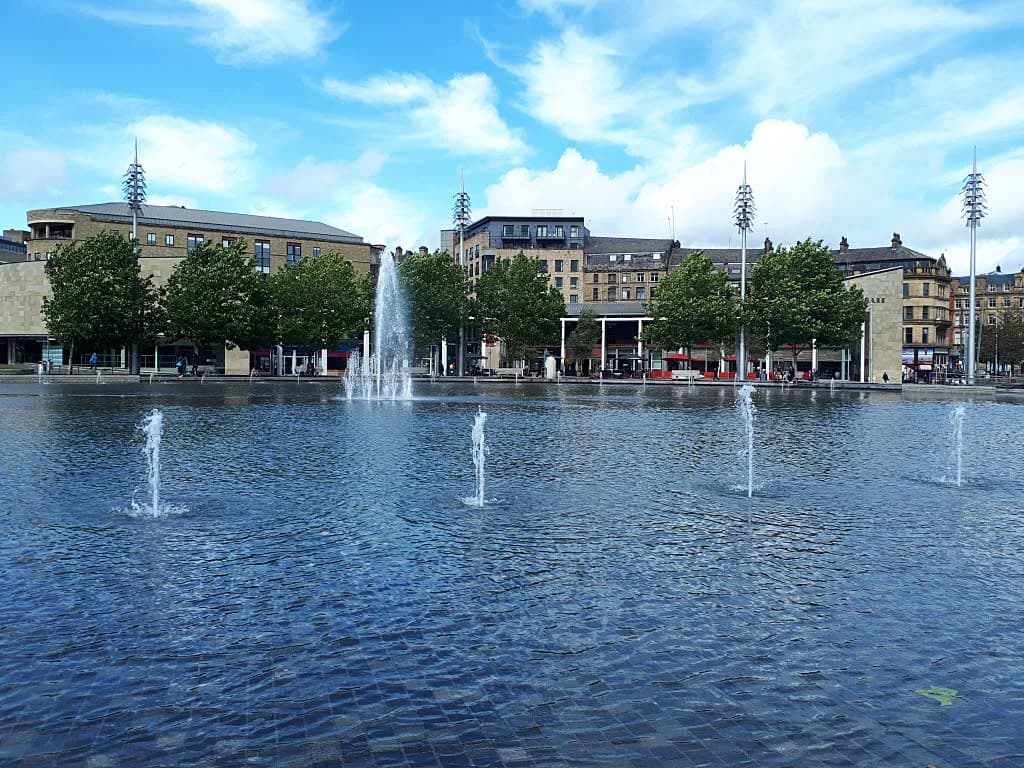
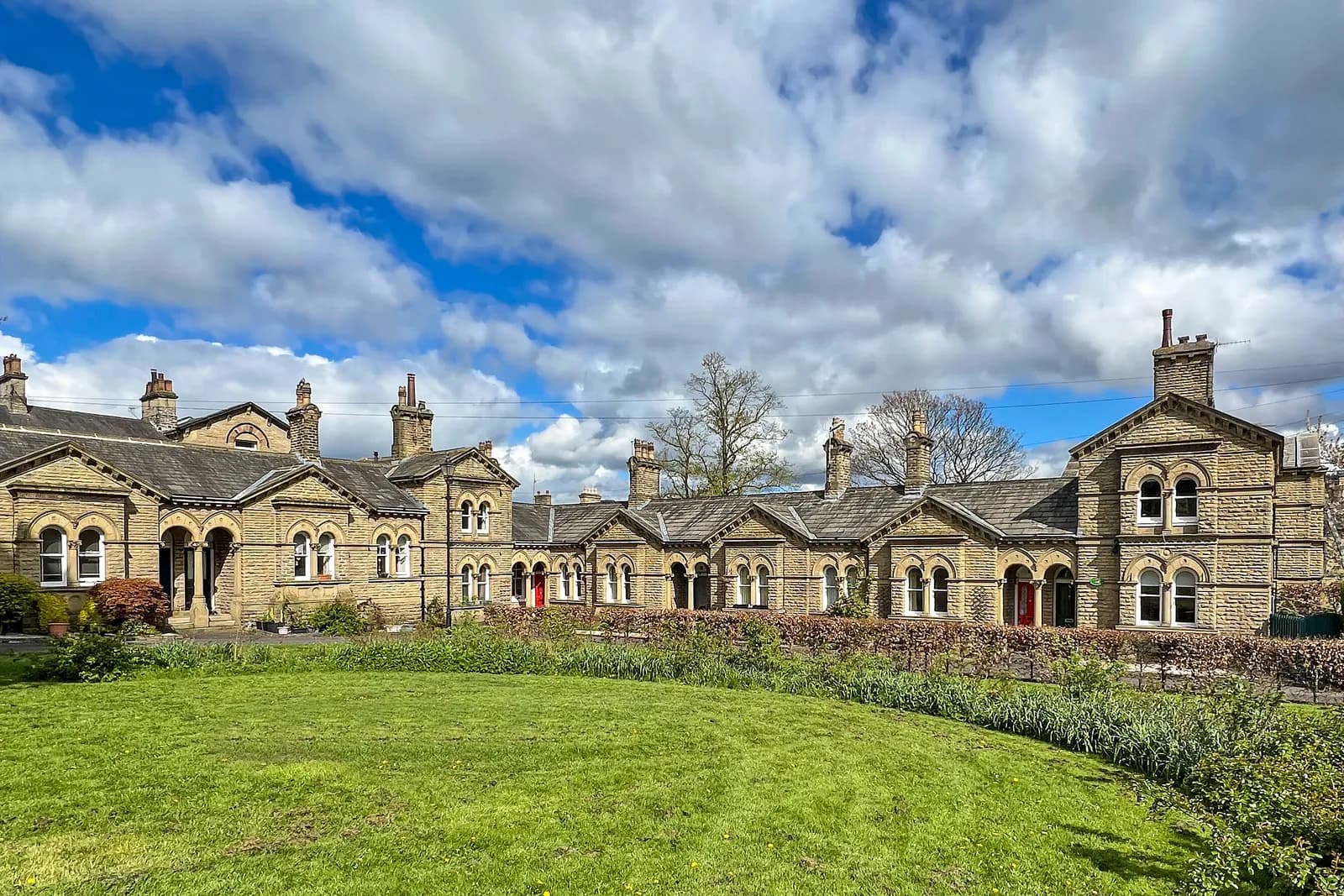
In the 1850s, a wave of German Jewish merchants arrived in Bradford to trade in wool. Within two decades, they had constructed one of the most architecturally ambitious warehouse districts in Victorian Britain. The area became known as Little Germany, and its Italianate palazzi remain among the most striking legacies of Bradford's industrial boom.
Origins of a Trading Hub
Bradford's transformation from a rural market town of 6,393 residents in 1801 to the self-proclaimed "wool capital of the world" with 182,000 people by 1850 created opportunities that attracted merchants from across Europe. Leo Shuster, a Jewish convert to Unitarianism, built the first German warehouses in Bradford in 1836. The district began developing in earnest from 1855; approximately 80 per cent of the warehouses were constructed between 1860 and 1874.
Jacob Behrens led this mercantile migration. Born in Bad Pyrmont, Germany, on 20 November 1806, Behrens settled in Leeds in 1834 before moving to Bradford in 1838. He established S.L. Behrens & Co. and became instrumental in the town's commercial development. He helped engineer the Cobden–Chevalier Treaty of 1860, which reduced tariffs with France and opened new markets for Bradford's worsted manufacturers. He was also a founding member of the Bradford Chamber of Commerce in 1851 and became the first foreign-born and Jewish honorary mayor of Bradford. Queen Victoria knighted him in 1882.
The "Merchant Princes"
Several prominent German Jewish families established businesses that shaped Bradford's commercial landscape. Charles Semon, born in Danzig in 1812, became the first foreign-born and Jewish Mayor of Bradford in 1864. He served as Vice President of the Bradford Chamber of Commerce in 1871 and bequeathed £35,000 to Bradford educational institutions upon his death in 1877.
Jacob Moser arrived in Bradford in 1863 from Kappeln in the Duchy of Schleswig. He became a partner in Edelstein, Moser and Co. in 1872 and eventually served as Lord Mayor of Bradford in 1910. His philanthropic giving was estimated at £750,000. Jacob Unna, Behrens' right-hand man who lived at 2 Eldon Place from 1858 until his death in 1881, laid the foundation stone of Bradford Reform Synagogue in 1880 and was a founding member of the Bradford Chamber of Commerce.
Other notable merchants included Leopold Reiss, whose warehouse at 6 Currer Street was built between 1857 and 1858; Nathan Reichenheim of Berlin, whose warehouse at 4 Currer Street was designed by Lockwood and Mawson and completed in 1859; and J.P. Kessler of Frankfurt, whose Albion House at 64 Vicar Lane was finished by 1875.
Between 1875 and 1914, approximately 193 wool warehouses were built in the district.
Architecture of Ambition
The warehouses of Little Germany represent a concentrated collection of Victorian commercial architecture. The predominant style is neoclassical with Italian influence, often described as Italianate palazzo design. Local brown sandstone provided the building material, with rusticated ground floors, decorative string courses, large rectangular windows, ornate entrances, and dramatic parapets.
Leading architectural practices including Milnes & France, Lockwood & Mawson, Andrews & Delaunay, and J.T. Fairbank left their mark on the district. The Behrens warehouse at 26 East Parade, designed by Milnes and France and completed in 1873, is a Grade II* listed building of 48,000 square feet. The Behrens name remains preserved in its wrought-iron screen. The Grade II listed warehouse at 4 Currer Street for Nathan Reichenheim, built in 1859, was among the earliest commissions of Lockwood and Mawson, who later designed Bradford's Town Hall.
Caspian House at 61 East Parade, built in 1873 for D. Delius and Company, was the family home of the parents of the composer Frederick Delius. Merchants House on Peckover Street, constructed in 1902 for Victor Edelstein and Jacob Moser, featured innovative use of rolled steel joists.
Trade and Civic Life
The warehouses functioned as export clearing houses for worsted cloth and yarn. Basements provided storage while upper rooms housed stock, sales operations, and packaging facilities. The concentration of German merchants gave the district its name, though it was also referred to as "Germania" or "New Germany".
The German Jewish community's influence extended beyond commerce. The Bradford Wool Exchange on Market Street, built between 1864 and 1867, was funded partly through Jewish merchants and features Magen David ornaments on its windows. St George's Hall on Bridge Street, built in 1853, received generous subscription financing from German Jewish merchants including Jacob Moser. The Hallé Orchestra was brought to Bradford from 1865 through these connections.
The Bradford Reform Synagogue on Bowland Street, built between 1880 and 1881 and consecrated on 29 March 1881, is a Grade II* listed building in distinctive Moorish or Oriental style. It was an unusual foundation for a British city, as Reform synagogues were typically established after Orthodox ones. The Orthodox Synagogue at 15–17 Spring Gardens followed in 1906, though it closed in 1970.
Preservation and Regeneration
Little Germany was designated a Conservation Area in 1976. The Bradford Council completed a Conservation Area Assessment in September 2005 and an Appraisal in August 2007. The district remains one of Bradford's busiest commercial areas, housing over 110 businesses and approximately 3,000 workers, while attracting around 100,000 visitors annually.
Major regeneration projects have included Eastbrook Hall, originally a Methodist mission built in 1903, which was converted into 63 apartments in 2008 at a cost of £11 million. The Gatehaus, an 11-storey glass building constructed between 2005 and 2007 at a cost of £22 million, represents contemporary development within the historic district. In 2012, German-owned retail giant Freemans (Grattan) opened its headquarters in a Grade II-listed former wool warehouse.
Not all historic buildings survived. The Schuster Fulda & Co warehouse at 62 Leeds Road, built between 1869 and 1873, was demolished in 1986. The Bradford Reform Synagogue has been repaired through grants and donations, including contributions from the local Muslim community.