Saltaire, the Victorian model village four miles north of Bradford, stands as one of the most complete examples of 19th-century industrial philanthropy in the world. Designated a UNESCO World Heritage Site in December 2001, it remains a defining part of Bradford's heritage and a testament to the vision of one man: Sir Titus Salt.
The Vision of Sir Titus Salt
In 1851, Sir Titus Salt, a leading figure in the Yorkshire woollen industry, commissioned the construction of a new village near Shipley to house the workers of his expanding textile business. He moved his operations from Bradford to a site beside the Leeds and Liverpool Canal and the railway, seeking not only improved logistics but also better living conditions for his employees than those offered by the slums of Victorian Bradford.
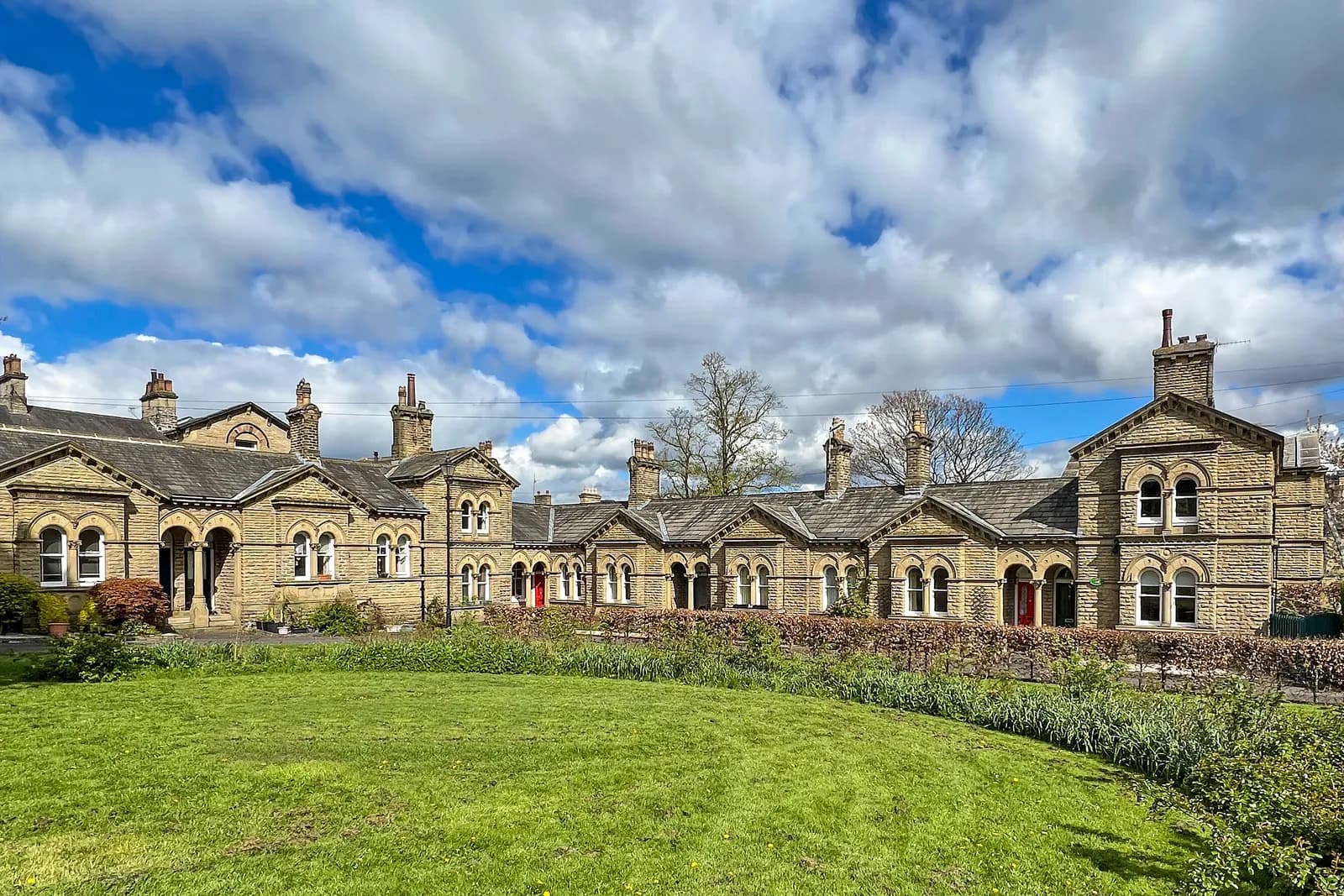
Salt employed architects Francis Lockwood and William Mawson to design the village in the Italianate style. Between 1851 and 1871, they built neat stone terraced houses alongside wash-houses with tap water, bath-houses, a hospital, and an institute for recreation and education. The institute contained a library, reading room, concert hall, billiard room, science laboratory, and gymnasium. The village also included a school, almshouses, allotments, a park, and a boathouse. By 1871, the census recorded 800 dwellings, including 755 houses and 45 almshouses, housing a population of 4,389 people.
The Congregational church, now Saltaire United Reformed Church, was built as a centrepiece of the village and holds Grade I listed status. Sir Titus Salt died in 1876 and was buried in the mausoleum next to the church. In October 1872, Saltaire had already gained international recognition when it featured as a highlight of the Japanese Government's Iwakura Mission tour of modern industrial Britain.
Salts Mill and the Textile Trade
Salts Mill was constructed between the railway and the Leeds and Liverpool Canal, and it operated as a textile mill from 1853 until February 1986. After Sir Titus Salt's death, and subsequently his son's, the village was taken over by a partnership that included Sir James Roberts. Saltaire remained under the ownership of the mill until it was sold to the Bradford Property Trust Ltd. on 31 July 1933. Improvements followed in October 1933, including the renewal of gas services, the provision of mains electricity, and upgrades to sewerage and sanitation.
In 1987, Jonathan Silver purchased the mill and began a major renovation. Today, Salts Mill functions as a multi-purpose space housing an art gallery, restaurants, shops, and the headquarters of a technology company. The 1853 Gallery displays a significant collection of works by Bradford-born artist David Hockney, including paintings, etchings, and drawings. The "People and Process" exhibition tells the story of the mill through objects, machinery, clothing, and art, and includes Sir Titus Salt's original boardroom furniture. The "New Mill" across the canal now contains offices for local National Health Service Trusts and residential flats.
UNESCO Recognition and What It Means
Saltaire was inscribed as a UNESCO World Heritage Site in December 2001. UNESCO noted that the village is an outstanding and well-preserved example of a mid-19th-century industrial town, reflecting philanthropic paternalism and the textile industry's role in economic and social development. The model town is widely regarded as a landmark example of enlightened 19th-century urban planning, combining quality housing, employment, recreation, educational facilities, and social services within a single, coherent settlement.
Saltaire Today
Saltaire remains a conservation area and has survived remarkably intact, though it faces ongoing challenges from traffic through the Aire Valley. Roberts Park, situated north of the river, was given to Bradford Council in 1920 by Sir James Roberts and has since been restored by the council after periods of neglect and vandalism. Bradford Council's clean air zone includes Salts Mill, though passenger cars are currently exempt from charges.
The village is served by Saltaire railway station, making it easily accessible from Bradford and Leeds. The Saltaire Festival, which began in 2003 to celebrate the village's 150th anniversary, is held annually in September. The Saltaire Arts Trail, a visual arts festival, takes place each May and features exhibitions, children's activities, a Makers Fair, and Open Houses. Victoria Hall, originally the Saltaire Institute, continues to host meetings, community events, and concerts, and houses a Wurlitzer theatre pipe organ.
For Bradford, Saltaire is more than a heritage attraction; it is a living reminder of the city's industrial past and the ambition of its Victorian entrepreneurs. The village attracts visitors from across the world, yet it remains a residential community where people live, work, and gather much as Salt intended nearly two centuries ago.