In 1801, Bradford was a rural market town of barely six thousand people. Within five decades it had become the wool capital of the world; now, designated UK City of Culture 2025, it is reshaping itself around arts, heritage, and a ten-billion-pound economy.
The Rise of Woolopolis
In 1801, Bradford had a population of just 6,393, with wool spinning and cloth weaving carried on as cottage industries. The Industrial Revolution transformed the town almost beyond recognition. By 1850, the population had surged to 182,000 as workers arrived to labour in the mills. Bradford specialised in worsted cloth and earned the nickname "wool capital of the world". The scale of industry was immense; more than 200 factory chimneys earned Bradford a reputation as the most polluted town in England. Major employers included Titus Salt, who took over his father's woollen business in 1833, and Samuel Lister, the worsted spinner whose Lister's Mill became a landmark.
Mills Fall Silent
From the mid-twentieth century, deindustrialisation caused Bradford's textile sector to contract. One by one, the mills that had defined the skyline fell quiet. Salts Mill, the vast complex built by Sir Titus Salt at Saltaire, ceased textile production in February 1986. The closure marked the end of an era for a city whose identity had been woven into wool for more than a century.
Repurposing the Past
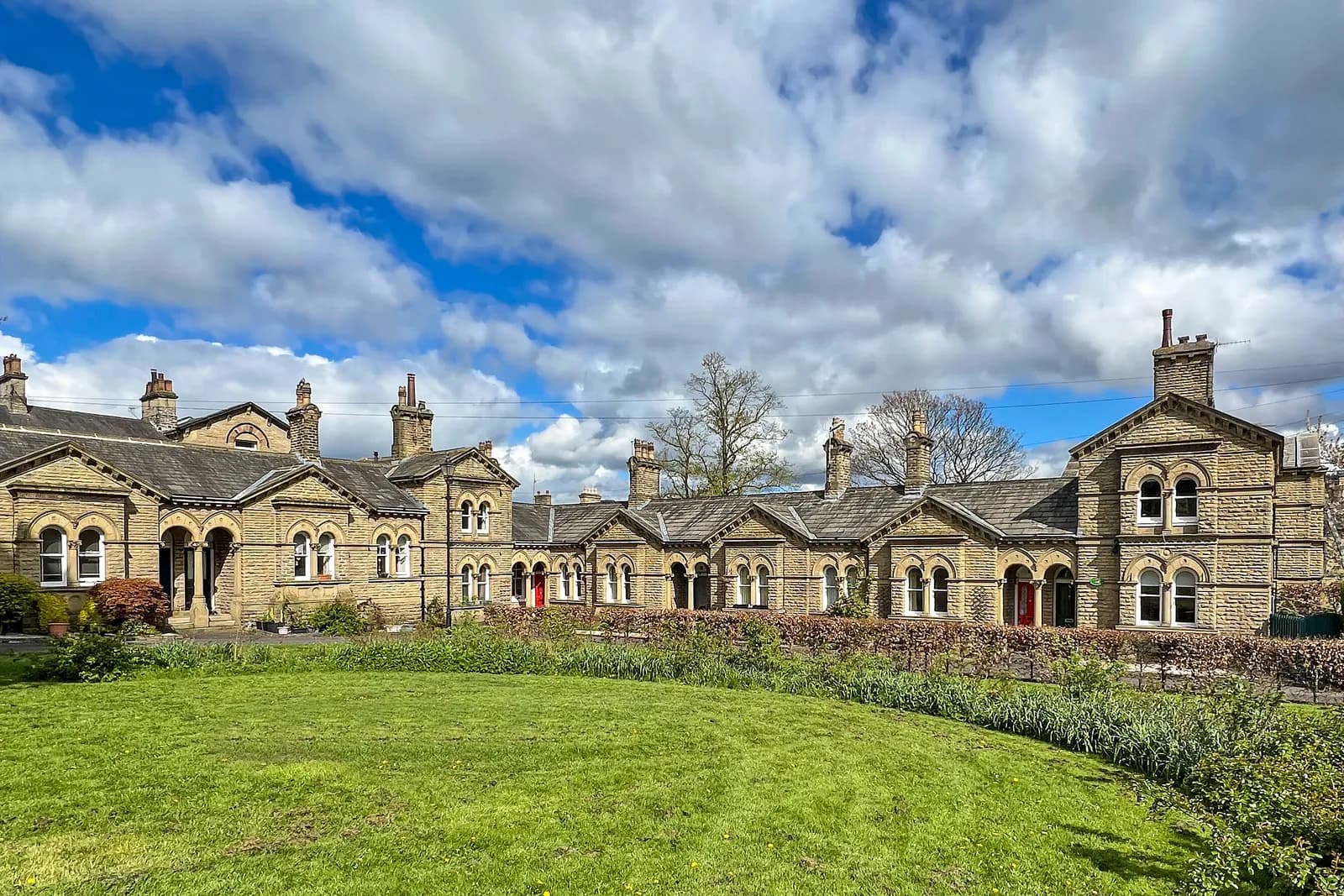
Rather than demolish its industrial legacy, Bradford has preserved and adapted it. Saltaire, the Victorian model village commissioned by Salt in 1851, was designated a UNESCO World Heritage Site in December 2001. After Salts Mill closed, the building was renovated; it now houses the 1853 art gallery, which features works by David Hockney, alongside shops, restaurants, and industrial tenants. Moorside Mills, a textile factory built in 1875 for worsted spinning, became the Bradford Industrial Museum in 1974. The museum now holds relics of local industry, including printing and textile machinery.
New Cultural Foundations
Bradford has built new institutions alongside its repurposed mills. The National Science and Media Museum, part of the national Science Museum Group, occupies seven floors of galleries devoted to photography, television, animation, videogaming, and the science of light and colour. It also houses three cinemas, including Europe's first IMAX screen, which opened in April 1983. The museum closed temporarily in July 2023 for refurbishment and reopened on 16 January 2025. Bradford was also named the world's first UNESCO City of Film.
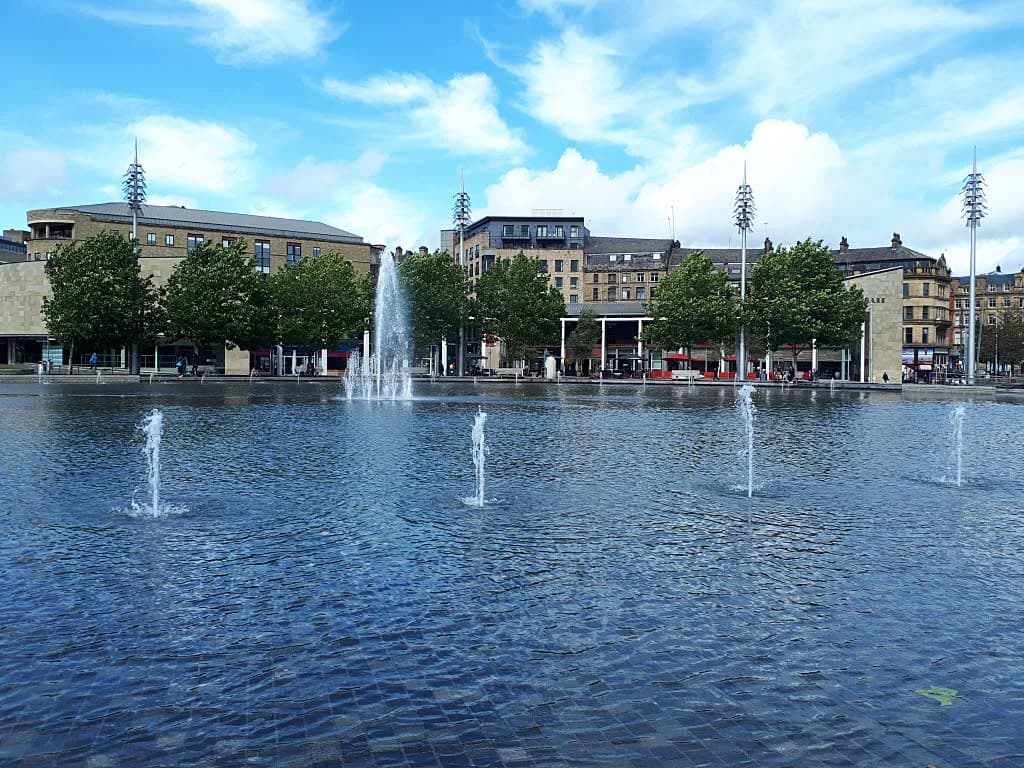
In the city centre, Bradford City Park opened on 24 March 2012. Its mirror pool contains the highest fountain in any British city, shooting water up to 100 feet, alongside more than 100 smaller fountains, laser light projectors, and loudspeakers. The park was named "best Place in the UK and Ireland" by the Academy of Urbanism in 2012.
City of Culture 2025
On 31 May 2022, Bradford was designated UK City of Culture for 2025. The Bradford Culture Company is responsible for delivering the programme, which includes exhibitions such as "Tower of Now" and "Balancing Acts", along with performance events and pop-up venues. The designation arrives at a time when Bradford's economy is estimated at around £10 billion, making it the third-largest in the Yorkshire and the Humber region, with financial and manufacturing industries now the primary drivers. According to the 2021 census, the city of Bradford had a population of 352,317, while the wider metropolitan borough was home to 546,976 people.